

Sculptural Lighting for Modern Living Rooms: 2026 Guide
Table of Contents
- Why Sculptural Lighting Changes How a Living Room Feels
- How to Choose the Right Scale and Silhouette for Your Space
- How to Layer Lighting in a Modern Living Room
- Sculptural Floor Lamps for Ambient Lighting
- The Benefits of Investing in Artisan Made Light Fixtures
- Color Temperature, Bulbs and Getting the Glow Right
- Installation, Cords and Cleaning Complex Geometries
- Conclusion
- Frequently Asked Questions
Last Updated: September 25, 2026
Why Sculptural Lighting Changes How a Living Room Feels
A living room lit only by a ceiling fixture reads as functional. Lit by sculptural lighting, it reads as inhabited. Light placed at eye level and below compresses a room into something intimate; light from above flattens it. This guide treats sculptural lighting for modern living rooms as a design decision rather than a purchase.
How to Choose the Right Scale and Silhouette for Your Space
Get the scale right before you fall in love with a shape. A fixture that is too small disappears against a large wall; one that is too large crowds the seating it serves. As a rule, a table lamp should sit between one-third and one-half the height of the surface it stands on, and a floor lamp should reach close to seated eye level.

Matching Fixture Scale to Ceiling Height and Room Size
Low ceilings, under about 2.4 metres, reward fixtures that stay below eye level. Tall rooms can carry a pendant or a taller floor lamp without feeling top-heavy. Consider where the fixture will actually be seen from, usually a sofa, not the doorway.
Reading a Silhouette: Visual Weight, Negative Space and Shadow Play
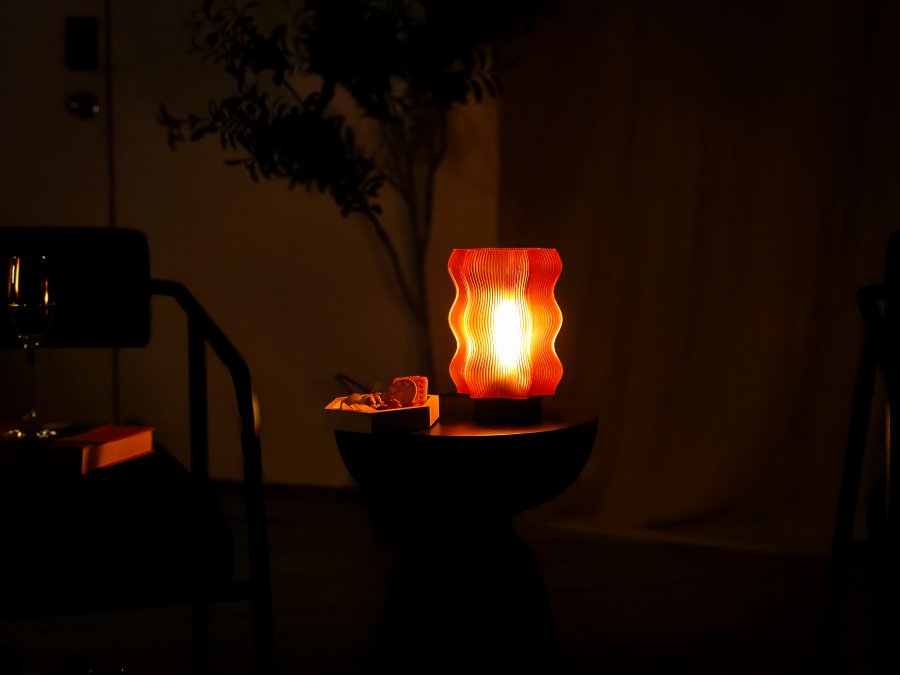
Silhouette is what a fixture does when it is switched off. A ribbed or pleated form holds material depth and throws shadow play across a wall; a smooth rounded form reads as a single soft mass. An open profile lets light spill and keeps the piece from feeling heavy in a small room.
| Room Condition | Fixture Scale | Silhouette Direction |
|---|---|---|
| Low ceiling, small room | Compact table lamp | Rounded, closed form |
| Tall ceiling, open plan | Floor lamp or pendant | Tall, slender profile |
| Long blank wall | Oversized statement piece | Ribbed or pleated texture |
| Busy, layered interior | Mid-size accent lamp | Smooth, minimal shape |
How to Layer Lighting in a Modern Living Room
Layering lighting in a modern living room means giving each layer a job: one source for ambient glow, one for task, one for accent. Most rooms fail because all three jobs are assigned to the same switch. Split them and the room gains range, from bright enough to work to dim enough to sit in.
- Ambient: a sculptural table or floor lamp at 2700K, dimmable, placed off-center
- Task: a focused reading light beside the main seat, angled away from other eyes
- Accent: a small lamp on a shelf or sideboard to graze a wall and add depth
- Control: dimmers on every layer, so evening can arrive gradually rather than all at once
Sculptural Floor Lamps for Ambient Lighting
Sculptural floor lamps for ambient lighting solve a specific problem: they add light without a table, a cord run across the room, or an electrician. That makes them the most useful piece in a rental, and the most flexible piece in a room you are still figuring out. Place one behind a sofa or beside an armchair and aim the glow at the wall rather than into the room; the reflected light is softer and the fixture becomes the focal point.
What to Check Before You Buy a Floor Lamp
Most guides stop at the shape. The practical questions come first, because a floor lamp that fails on any of these ends up unplugged in a corner.
- Weight and stability. A tall sculptural floor lamp with a heavy shade or stone base can weigh considerably more than a standard lamp. Check the base diameter against the lamp's height: a narrow base under a tall, top-heavy form tips easily, especially on carpet. With children or a dog, a weighted base or one that tucks under the sofa edge is safer.
- Cord length and outlet position. Measure from where the lamp will stand to the nearest outlet before you commit. Most floor lamps ship with a cord in the 1.8 to 2.4 metre range. If the outlet is further, plan the route along a skirting board or behind furniture rather than across a walking path.
- Switch type. An inline cord switch is simplest and works anywhere. A foot switch is easier to reach but collects dust. A touch or dimmable switch gives the most control but ties the lamp to its own dimming circuit rather than a wall dimmer.
- Bulb access. On a sculptural shade with a narrow opening, changing a bulb can be awkward. Check how the shade opens or lifts before you buy, particularly on ribbed or pleated forms.
Cable Management That Actually Works
Where the piece is corded rather than hardwired, route the cable along a skirting board or behind furniture and use a switched outlet. A floor lamp that needs an extension cord across a walking path will be unplugged within a month.
- Run the cord along the base of the wall, not diagonally across the floor.
- Use adhesive cable clips in a colour that matches the skirting, spaced roughly every 30 centimetres.
- Where the cord must cross an open floor, a low-profile cord cover in a matching floor tone is less noticeable than a bare cable.
- If the lamp sits behind a sofa, leave enough slack at the plug end to pull the sofa out for cleaning.
Floor Lamp or Table Lamp?
A floor lamp earns its place when there is no surface to set a lamp on, when the room needs light at a height a table cannot reach, or when the fixture is meant to be the sculptural focal point. A table lamp is better when you want the light lower, closer to a seat, and easier to move. Many modern living rooms end up with both: a floor lamp for the ambient wash and a table lamp for the pool of light beside the main seat.
The Benefits of Investing in Artisan Made Light Fixtures
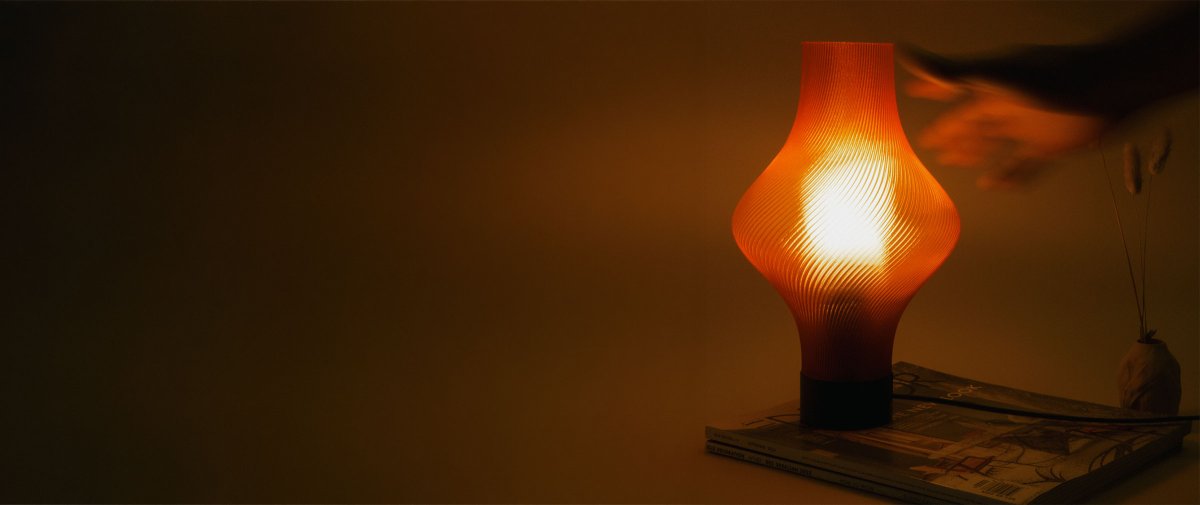
The benefits of investing in artisan made light fixtures come down to three things: how the piece is made, how long it lasts, and how it behaves when the light is off. Small-batch production means a maker handles the form, the finish, and the light test, so the diffused light a shade produces is a decision rather than an accident of tooling.
What Small-Batch Production Actually Changes
In mass production, a shade is designed once and reproduced in the thousands; consistency is the goal and variation is a defect. In small-batch work the opposite is true. Each piece is finished by hand, which is why two shades in the same run can carry slightly different texture, and why the light they cast reads warmer and less uniform.
Caring for Complex Geometries
This is the part most guides skip, and it decides whether a sculptural fixture still looks considered in five years. Ribbed, pleated, open and layered forms collect dust where a flat shade does not, and the wrong method dulls a finish or leaves streaks in a matte surface.
A routine that works:
- Dust first, always dry. Use a soft dry brush, a microfibre cloth, or a vacuum on its lowest setting with a brush attachment. Work along the ribs or pleats rather than across them, so you lift dust out of the groove instead of pushing it deeper.
- Keep liquids off unsealed finishes. Damp cloths and sprays can stain an unsealed surface or leave water marks in a matte finish. Unless the maker's instructions say otherwise, stay dry.
- Switch off and let it cool. Heat softens dust onto a surface and makes it harder to remove. A cool fixture is easier to clean and safer to handle.
- Reach the interior. On a shade with a narrow opening, a soft brush on a short handle reaches the inside surface where dust settles against the diffuser. Do this less often than the exterior, but do not skip it.
- Mind the bulb. A bulb that presses against the interior of a shade can scorch or discolour it over time. Check that the bulb shape clears the shade, and replace it with the same base and a similar profile.
Why This Matters Over Time
A mass-produced shade is designed to be replaced. A small-batch piece is designed to be kept, which changes how you care for it. The qualities that make a handmade fixture worth owning, the hand-finished surface, the deliberate diffusion, the variation between pieces, reward a little attention. A five-minute dust every few weeks is the whole maintenance routine for most sculptural pieces, and the difference between a fixture that ages and one that dates.
Color Temperature, Bulbs and Getting the Glow Right
Color temperature decides whether a lamp feels like a living room or a waiting room. Warm light around 2700K to 3000K suits evening interiors; above 3500K reads clinical, and above 4000K reads like an office. Look for the Kelvin figure on the bulb packaging, not the word "warm" on the front.
| Goal | Colour Temperature | Notes |
|---|---|---|
| Evening ambient glow | 2700K | Dimmable, high CRI |
| Reading and task | 3000K | Directional, shade the bulb |
| Accent and wall grazing | 2700K-3000K | Aim at the wall, not the room |
| Avoid for living rooms | 4000K and above | Reads as office or retail |
Installation, Cords and Cleaning Complex Geometries
Most sculptural fixtures need less installation than people expect. A table lamp needs a surface and an outlet; a floor lamp needs the same plus a clear cable route. Only a pendant or hardwired ceiling piece needs an electrician, and even then the work is straightforward if a ceiling supply exists. Renting is not a barrier: plug-in configurations hang from a ceiling hook and leave nothing behind when you move.
Conclusion
The hardest part of sculptural lighting is not choosing the piece, it is trusting that one well-made fixture can do the work a whole ceiling of downlights never managed. Warmth, character and calm come from where the light sits and how it is controlled, not from how much of it there is. ORIJA designs and builds sculptural lighting in small batches in its Ontario studio, made to order, with plug-in and hardwired options for renters and owners alike.
Frequently Asked Questions
How do you choose the right scale for sculptural lighting in a living room?
Start with the surface or ceiling it hangs from, not the fixture itself. A table lamp around 40 to 50 cm tall suits a side table beside a sofa; a pendant should leave at least 75 cm of clearance above a coffee table so nobody walks into it. In a room with standard 2.4 m ceilings, a shade wider than about a third of the table beneath it starts to look heavy. Small rooms usually take one piece with real presence better than three small ones.
What is the difference between ambient and sculptural lighting?
Ambient lighting describes the job a light does: it fills a room with soft, even illumination so you can move around without harsh glare. Sculptural lighting describes the form: a fixture whose shape, material and silhouette read as an object even when it is switched off. The two overlap often. A sculptural table lamp with a diffused shade can be the main source of ambient glow in a living room, which is why so many people now skip the ceiling fixture entirely.
Where should sculptural floor lamps be placed for the best effect?
Corners and the ends of seating runs, not the middle of a walkway. Placing a floor lamp about 30 to 45 cm behind and to the side of an armchair throws light across the reader's shoulder rather than into their eyes. In an open-plan room, use it to mark the edge of the living zone and separate it from the dining area. Keep the shade below eye level when you are seated so the bulb stays hidden.
How can artisan-made lighting change the mood of a living room?
Hand-finished surfaces diffuse light unevenly, and that unevenness is what makes a room feel warm rather than flat. A ribbed or pleated shade breaks light into soft bands and throws gentle shadow play onto the wall behind it. Mass-produced shades usually spread light in one even wash. The difference is most obvious in the evening, when a single well-made piece at low brightness does more for atmosphere than several bright fixtures.
What color temperature should I choose for a living room lamp?
Warm light in the 2200K to 2700K range suits living rooms and bedrooms, because it reads closer to candlelight and late-afternoon sun. Anything at 4000K or above looks clinical in a space where you relax. Look for a dimmable bulb so you can drop the brightness after dinner without changing the color. A warm bulb behind a diffusing shade is the single easiest upgrade to how a room feels at night.
How does small-batch lighting differ from mass-produced fixtures?
Small-batch production means each piece is made in limited runs, often to order, so the maker can adjust proportions, finishes and shade geometry between batches. That shows up in details like a hand-finished metal surface, a shade that sits perfectly level, or a slight variation between two pieces from the same run. Mass-produced fixtures are identical because they are molded or stamped in volume. Neither is automatically better, but they age and read differently in a room.
Do plug-in sculptural lights work if I rent my home?
Yes. Plug-in and shade-only configurations exist precisely for people who cannot hardwire anything. A plug-in pendant hangs from a ceiling hook and runs a cord to a standard outlet, so you get the look of a pendant without touching the building's wiring. Shade-only options let you reuse a lamp base or fitting you already own. Both come apart in minutes when you move, which matters if you might leave within a year or two.
How do I clean a sculptural light with a complex shape?
Dust first, then wipe. Use a soft dry brush or a vacuum on its lowest setting with a brush attachment to lift dust out of ribs, pleats and layered surfaces, working from the top down. For a damp wipe, use a barely moist microfiber cloth and avoid spraying anything directly onto the fixture. Always unplug or switch off at the breaker before cleaning, and let the piece cool completely if it has been on.