

Modern Home Decor for Small Spaces: 2026 Ideas
Table of Contents
- Why Small Spaces Need Intentional Design
- Sculptural Lighting for Small Rooms: Make a Statement Without the Bulk
- How to Arrange Furniture in a Small Living Room for Better Flow
- Minimalist Apartment Decor Ideas That Feel Warm, Not Cold
- Vertical Storage and Floating Shelves: Use Your Walls
- The Psychological Impact of Clutter and How Decor Changes It
- Renter-Friendly and Sustainable Choices for Small Spaces
- Conclusion: Build Your Small Space Around One Strong Piece
- Frequently Asked Questions
Last Updated: September 8, 2026
Decorating a small space isn't about making it look bigger; it's about making it feel intentional. Modern home decor for small spaces succeeds when every piece earns its place through function, beauty, or both, rather than when you simply squeeze in scaled-down versions of larger rooms. At ORIJA, a design studio crafting handmade sculptural lighting, we believe the most effective approach starts with a single anchor piece and builds outward, prioritizing vertical surfaces and layered illumination. Below, we’ll show you exactly how to transform a compact footprint into a calming sanctuary using sculptural lighting, strategic furniture arrangement, and a neutral palette.
Why Small Spaces Need Intentional Design
Small rooms punish indecision. When floor area is limited, every item carries significant visual weight, meaning a single oversized sofa or a cluttered wall can make the entire space feel cramped and chaotic. Intentional design counters this by focusing on scale and proportion, ensuring each piece fits both physically and aesthetically.
The goal is a cozy aesthetic, not a crowded one. This means selecting multifunctional furniture, establishing clear traffic flow, and resisting the urge to fill every corner. A well-edited small room feels more spacious and restful than a larger one packed with possessions, a principle rooted in the psychological comfort of open space. By treating your floor plan as a curated gallery rather than a storage unit, you set the stage for a home that feels both expansive and deeply personal.
Sculptural Lighting for Small Rooms: Make a Statement Without the Bulk
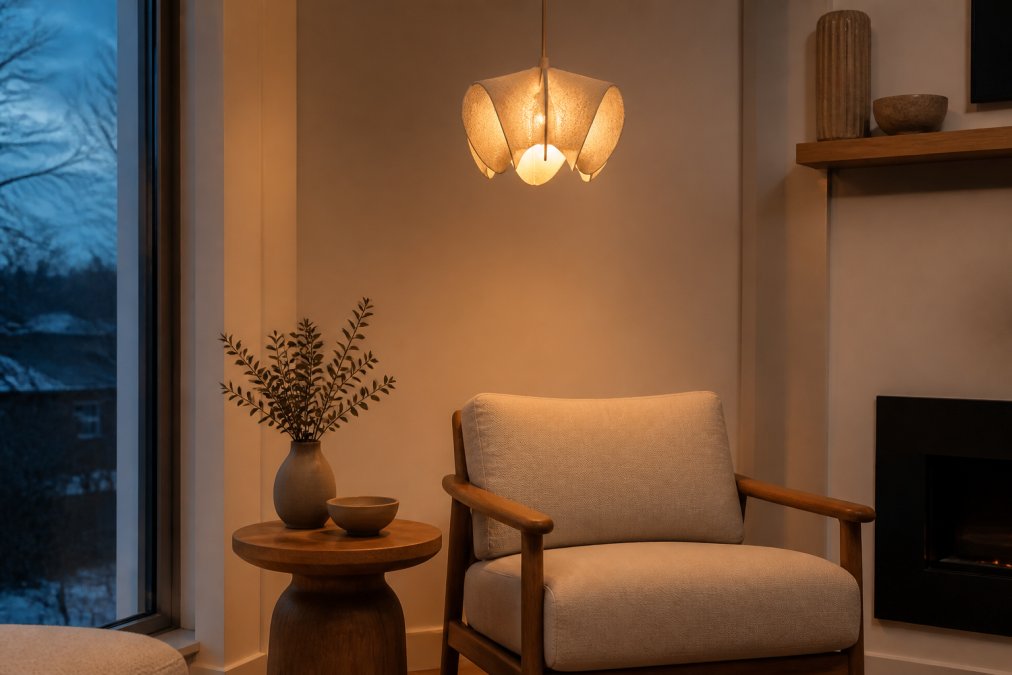
The best way to add drama to a small room is overhead, where it doesn't compete for floor space. Sculptural lighting for small rooms provides an artistic focal point while drawing the eye upward, emphasizing ceiling height and creating a sense of volume that floor lamps simply cannot match.
A single statement pendant or flush-mount fixture acts as functional art, eliminating the need for additional tabletop decor that clutters surfaces. This is where the philosophy of ORIJA shines: our sculptural lighting, designed and handcrafted in our Ontario studio, is made to order in small batches, ensuring your piece is unique. The warm, diffused glow from a handmade fixture creates softer, more inviting shadows, transforming a plain corner into a moment of quiet luxury.
How to Arrange Furniture in a Small Living Room for Better Flow
Arranging furniture in a small living room begins with mapping your traffic flow, not pushing pieces against the walls. Start by identifying the room's primary pathway, then position seating to define conversation zones without blocking that route. Floating furniture away from walls, even by just a few inches, creates a more airy and intentional layout.
Step 1: Define the Circulation Zone
Before moving anything, measure the room and mark the main walkway. In most apartments, the entry door, balcony door, or hallway opening dictates this path. Keep a clear corridor of at least 91 cm (the standard accessible width) through the room (ADA Design Standards). If your space is tighter, 76 cm is the practical minimum for comfortable daily movement. Tape the pathway on the floor with painter's tape to visualize it before committing to a layout.
Step 2: Anchor with One Primary Seating Piece
Prioritize a few well-proportioned pieces over many small ones. A single compact sofa (approximately 198 to 213 cm wide is typical for a small living room) paired with one or two lightweight chairs often works better than a bulky sectional. Look for sofas with legs that raise the base at least 10 cm off the floor; this exposes more floor area and makes the room feel less weighed down. Avoid deep seats (over 96 cm) that eat into your clearance.
Step 3: Respect the Coffee Table Gap
Ensure a gap of at least 46 cm between the coffee table and sofa for easy movement. If you regularly host guests, push that to 61 cm. For the table itself, choose a round or oval shape under 102 cm in diameter; sharp corners on a large rectangular table visually crowd a compact seating area. A lift-top coffee table with hidden storage adds function without expanding its footprint.
Step 4: Use a Rug to Define the Zone
Use a large, light-colored area rug to anchor the seating group, visually expanding the floor area. The rug should extend at least 15 cm beyond the front legs of your sofa and chairs. A rug that is too small breaks the room into fragments and makes the space feel choppy. In a standard 10 x 12-foot living room, an 8 x 10-foot rug is usually the right scale.
Step 5: Reconfigure for Flexibility
Consider modular furniture that can be reconfigured for different occasions. A two-piece modular sofa or a set of lightweight nesting tables lets you switch between a movie-night arrangement and an entertaining layout in under five minutes. Casters on accent chairs or a rolling cart for media equipment add the same flexibility without permanent changes.
Common Mistakes to Avoid
- Pushing everything against the walls: This creates a void in the center and makes the room feel like a hallway. Pulling seating 15 to 30 cm inward creates intimacy.
- Blocking a window or radiator: In homes, especially older builds, radiators and baseboard heaters are common. Keep at least 30 cm of clearance in front of any heat source for safety and airflow.
- Choosing a recliner for a narrow room: Full-size recliners need 76+ cm of clearance behind them to recline. A compact swivel chair or a rocker with a smaller footprint is often a better fit.
Minimalist Apartment Decor Ideas That Feel Warm, Not Cold
Minimalist apartment decor ideas often fail because they strip away personality along with the clutter. The key is to pair a neutral color palette with rich textures and warm accent lighting to avoid a sterile, showroom feel. Think layered wool throws, linen cushions, and the soft glow of incandescent bulbs.
Warm minimalism relies on restraint paired with sensory richness. Choose one or two accent wall colors or textured wall art to add depth, and let natural materials like wood and stone introduce warmth. This approach ensures your minimalist apartment feels like a retreat, not a waiting room.
Vertical Storage and Floating Shelves: Use Your Walls
When floor space is scarce, your walls become prime real estate. Vertical storage solutions, from floor-to-ceiling shelving units to floating shelves, draw the eye upward and maximize square footage without consuming valuable floor area. This strategy is essential for keeping surfaces clear and maintaining an open, airy feel.
Floating shelves are particularly effective for displaying curated objects, books, and plants while adding architectural interest. Install them in a staggered arrangement to create visual rhythm, or use a single long shelf above a sofa for a clean, linear look. For a seamless appearance, paint the shelves the same color as your walls. This approach reduces visual clutter and keeps everyday items accessible yet tidy.
The Psychological Impact of Clutter and How Decor Changes It
Clutter is not just a visual nuisance; it is a cognitive drain that can elevate stress and impede focus. A disorganized environment constantly signals unfinished work to your brain, which is why intentional decor is so powerful. By curating your space with purpose, you create a mental sanctuary that fosters calm and clarity.
This is where the concept of "calm through intentional lighting" becomes vital. A room bathed in soft, warm light from a sculptural piece, rather than harsh overhead glare, signals your nervous system to relax. The deliberate placement of a few meaningful objects, as opposed to a collection of knick-knacks, provides a sense of order and control. Investing in high-quality, handmade pieces that you love reduces the urge to accumulate, directly addressing the psychological need for a restorative environment.
Renter-Friendly and Sustainable Choices for Small Spaces
For renters, the fear of losing a security deposit often stifles design ambition, but permanent customization isn't the only path to a beautiful home. Focus on renter-friendly solutions like freestanding shelving, peel-and-stick wallpaper for an accent wall, and plug-in wall sconces that require no hardwiring. These choices deliver high impact without permanent alterations.
The Unique Angle: Sustainable Small-Space Design
Most decor guides treat small-space design as purely an aesthetic problem. But the environmental angle matters just as much: a smaller home naturally requires fewer resources to furnish, heat, and maintain. The real opportunity is choosing pieces that are both compact and built to last, avoiding the cycle of cheap, disposable furniture that ends up in landfills.
What to Look For in Sustainable Small-Space Furniture
- FSC-certified wood: Look for the Forest Stewardship Council label on solid wood shelving, tables, and bed frames. It guarantees the wood comes from responsibly managed forests.
- Local or Canadian-made pieces: Furniture made in Ontario, Quebec, or British Columbia reduces shipping emissions and supports regional craftspeople. Small-batch studios often use offcuts and off-the-shelf hardware rather than custom plastic molds.
- Modular systems that adapt: A shelving unit that works as a TV stand today and a room divider tomorrow eliminates the need to buy new furniture when your layout changes.
- Natural fiber textiles: Wool, linen, and cotton rugs and throws are biodegradable and often outlast synthetic blends. A wool rug in a high-traffic small living room can last 15 to 20 years with proper care.
Renter-Friendly Installation That Won't Cost Your Deposit
| Solution | What It Is | Deposit Risk | Removal Effort |
|---|---|---|---|
| Command picture strips | Holds lightweight frames and mirrors up to 7 kg | Very low | Peel off; no residue |
| Tension rod curtains | No drilling; fits inside window frames | Very low | Instant |
| Peel-and-stick wallpaper | Removable vinyl for accent walls | Low to moderate | Peel off slowly; may leave slight residue on old paint |
| Plug-in wall sconces | Hardwired look without electrical work | Low | Unscrew and patch two small holes |
| Freestanding shelving | Tall bookcases or ladder shelves | None | None |
Before using peel-and-stick wallpaper, test a small patch behind a door for 48 hours. On flat, well-primed walls it removes cleanly, but on textured or poorly painted surfaces it can pull paint chips. In older apartments with lead paint, avoid adhesive products entirely.
The Circular Economy Argument for Buying Less
Sustainability and style can coexist through the selection of durable, timeless pieces. Choosing small-batch, handmade decor from local artisans, like the pieces from ORIJA, reduces the environmental cost of mass production and ensures your items are built to last. This approach, supported by the principles of conscious consumption and slow design, encourages buying less but buying better. Similarly, research on the circular economy highlights how durable goods reduce waste. This mindful strategy not only minimizes your ecological footprint but also creates a home filled with stories and character, rather than disposable goods.
A Practical Budget Framework
Renter-friendly and sustainable are not competing priorities. The overlap, freestanding, modular, durable, locally made, is exactly where small-space design should focus.
Conclusion: Build Your Small Space Around One Strong Piece
Transforming a small space doesn't require a complete overhaul; it requires a shift in perspective. The most common mistake is furnishing a room with many mediocre items instead of investing in one exceptional anchor. A single, strong piece, whether it's a sculptural light fixture, a beautifully crafted sofa, or a substantial piece of art, provides a focal point that makes the rest of the room feel curated.
This principle of "one strong piece" is the core of our design philosophy at ORIJA. We believe that a handmade, sculptural light is not just an accessory but the emotional center of a room, providing warmth, character, and a sense of calm. When you invest in a piece that speaks to you, you naturally edit everything else around it.
Frequently Asked Questions
How can sculptural lighting change the feel of a small room?
Sculptural lighting draws the eye upward and creates a focal point, which distracts from a room's limited square footage. A single handmade pendant or wall sconce adds warmth and depth without taking up floor space. It also provides layered lighting that makes the room feel softer and more inviting. Choose a piece with a translucent shade or open design so it doesn't block light. This approach gives your small space a high-end, artistic feel without adding visual clutter.
What are some good decor ideas for a small living room?
Focus on furniture arrangement that keeps traffic flow clear, then add vertical storage like floating shelves. A compact coffee table with hidden storage handles double duty. Use mirrors or reflective accents to bounce light around the room. For modern home decor for small spaces, choose a neutral color palette with one accent wall. A sculptural lighting piece adds character without consuming floor space. Keep surfaces mostly clear and pick multifunctional furniture to maximize every square foot.
How do you make a small room look modern and spacious?
Start by decluttering: remove items that add visual weight. Choose furniture with exposed legs so the floor remains visible, which creates the illusion of more space. Arrange pieces away from walls to open up the center. Use light layering with a mix of overhead, task, and accent lighting. Stick to a neutral color palette and add texture through natural materials. A large mirror opposite a window reflects daylight and visually doubles the room's depth.
How do you balance minimalism with warmth in a small apartment?
Minimalism becomes warm when you add natural textures and intentional lighting. Choose wood, linen, wool, and ceramic accents to soften clean lines. A sculptural lighting piece in warm tones creates a cozy focal point. Keep furniture arrangement simple but leave room for personal objects like books or art. Layer lighting at different heights instead of relying on one harsh overhead fixture. This combination makes a minimalist space feel lived-in and calming, not sterile.
Making a small space feel expansive and serene is a challenge we understand intimately. At ORIJA, our made-to-order sculptural lighting is designed to be that one transformative piece, bringing warmth and artistic character to your most personal rooms. Each fixture is thoughtfully designed, prototyped, and handmade in our Ontario studio with a focus on intentional, high-end craftsmanship. Explore our collection and find the piece that will turn your compact room into a calming sanctuary.