

How to Create a Calming Home Atmosphere
Table of Contents
- Start With a Sensory Plan, Not a Shopping List
- What You'll Need
- Step 1: Sit in the Room and Do Nothing [Time: 10 minutes]
- Clear the Clutter That Keeps Your Brain on Alert
- The Best Lighting for Relaxation: Layer, Dim, and Warm
- Calming Color Palettes for Living Rooms and Bedrooms
- Minimalist Interior Design Tips That Add Warmth, Not Emptiness
- Bring in Natural Elements and Texture Layering
- Quiet the Room: Sound, Scent, and Tech-Free Zones
- Frequently Asked Questions
Last Updated: September 13, 2026
Start With a Sensory Plan, Not a Shopping List
Most people trying to create a calming home atmosphere start by buying things, a candle, a throw, a new lamp. Three months later the room still feels restless. The problem isn't effort, it's sequencing.
A calming home is a sensory system, not a collection of objects. Sight, sound, touch, and smell all feed your nervous system at once, and one loud element can cancel out five quiet ones, a cluttered countertop can undo a beautiful lamp.
At ORIJA, our studio work centers on this idea: intentional design, especially lighting, changes how a room feels before you can name why. Before you buy anything, spend ten minutes on a sensory audit.
Total Time: 30-60 minutes Difficulty: Beginner
What You'll Need
- A notebook or phone for notes
- 30 minutes alone in each room, ideally at night
- No budget required yet
Step 1: Sit in the Room and Do Nothing [Time: 10 minutes]
Sit still for ten minutes, ideally in the evening when the room is actually used. Write down every sound you notice. Then every light source. Then every surface you can touch from where you're sitting.
Expected Result: A short list of the loudest sensory inputs in the room, which is usually two or three items, not twenty.
That list becomes your priority order. Fix the loudest thing first.
Clear the Clutter That Keeps Your Brain on Alert
Visual clutter is not a style problem, it's a load problem. Every visible object asks your brain to make a micro-decision, and a calm room reduces those decisions to near zero.
Start with surfaces, not drawers. Counters, coffee tables, nightstands, and the floor are what your eye reads first, and a surface holding more than three non-functional objects reads as unfinished business.
The fix isn't minimalism for its own sake. It's giving every object a home so your eye stops asking questions.
- Clear all flat surfaces, then add back only what you use daily
- Group similar items together instead of scattering them
- Use closed storage for anything visually busy: cables, papers, remotes
- Leave one surface in each room deliberately empty
The Best Lighting for Relaxation: Layer, Dim, and Warm
The best lighting for relaxation is layered, dimmable, and warm-toned, with no single source doing all the work. Three small pools of soft light beat one bright ceiling fixture every time.
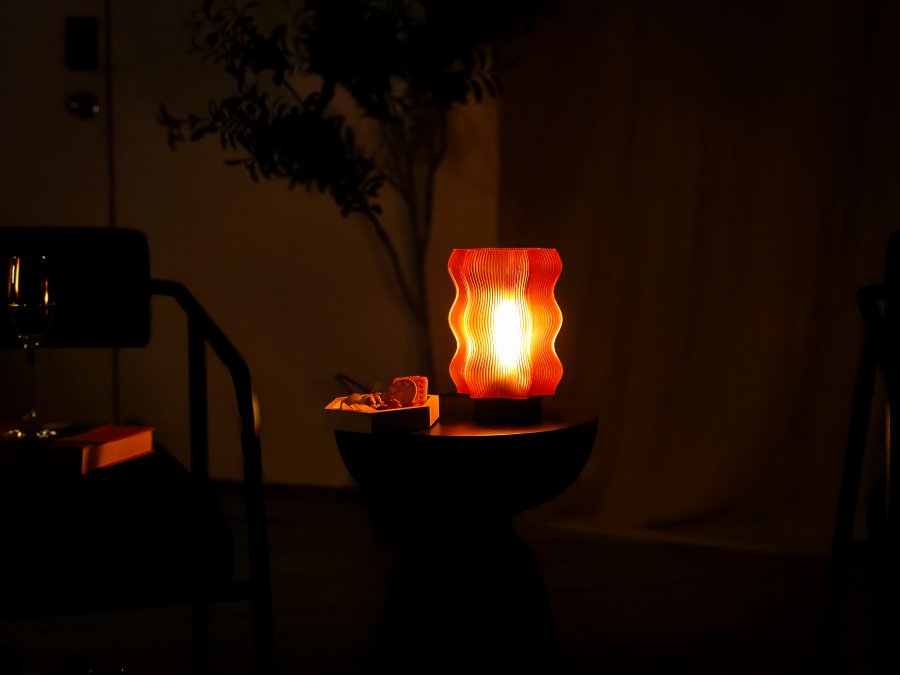
A cozy living room corner at dusk with a sculptural table lamp casting a warm, soft glow on a side table, shot in natural evening light
Why Overhead Lights Work Against You
Overhead lighting flattens a room, casting shadows downward and making it feel like an office. It's also usually the brightest, coolest light in the house, the opposite of what your body reads as evening. Turn the ceiling light off after dark and never turn it back on; that habit changes more than any purchase.
Choosing Warm Bulbs and Sculptural Fixtures
Warm bulbs, generally 2200K to 2700K, mimic sunset's amber tone and signal to your body that the day is winding down. Cool white bulbs, even dimmed, keep that signal switched off. Fixtures matter too: a shade that diffuses light softly spreads a gentler glow, and a sculptural table lamp becomes light source and visual anchor at once.
The Canada Mortgage and Housing Corporation guidance on home lighting and comfort notes that lighting quality affects how occupants experience a space day to day, which is worth keeping in mind when you plan a room around one fixture.
Calming Color Palettes for Living Rooms and Bedrooms
Calming color palettes for living rooms and bedrooms lean on muted, low-contrast tones: warm whites, soft greys, clay, sand, sage, and dusty blues. Lower contrast reads as quieter to the eye, and the reason goes deeper than taste.
Why Low-Contrast Palettes Calm the Nervous System
Your visual system evolved to detect edges and sudden changes. High-contrast combinations, pure white against charcoal, saturated red against green, force constant micro-saccades as your eyes jump between boundaries, keeping a low-level alertness running. Muted palettes reduce that scanning load, which is why a room in warm greys and oatmeals feels restful before you've consciously noticed the colors. The principle behind neuro-aesthetics is simple: contrast is stimulation, and stimulation at the wrong time of day works against rest.
The Soft-Contrast Structure
The mistake is treating "calming" as "beige everything." A room with no contrast at all feels flat. The goal is soft contrast, not none:
Layer |
Role |
Example Tones |
|---|---|---|
Base (walls, large surfaces) |
Sets the overall temperature |
Warm white, oatmeal, soft greige |
Mid (furniture, rugs) |
Adds depth without shouting |
Clay, sage, muted navy |
Accent (lighting, art, textiles) |
Provides one point of interest |
Amber, terracotta, brushed brass |
Notice that lighting sits in the accent layer. A warm amber glow against a muted wall is often the only contrast a calm room needs.
Testing Colors Before You Commit
Paint chips lie: a color that looks soft in the store can turn cool and grey on a north-facing wall. Before buying a full can, paint a sample at least two feet square on two walls and live with it for three days, checking it in morning, afternoon, and after dark with your lamps on (cmhc-schl.gc.ca). The color that stays calm across all three is the one to keep.
For renters, removable peel-and-stick wallpaper or a large fabric wall hanging can shift a room's palette without touching the wall. Choose a muted, low-contrast pattern and keep the rest of the room quiet so the wall doesn't compete.
A Note on Finish, Not Just Color
The same color in a different finish reads differently. Matte walls absorb light and feel softer; glossier finishes bounce it and add visual energy. Favor matte or eggshell on large surfaces and reserve sheen for small accents like a brass lamp base or ceramic glaze.
Minimalist Interior Design Tips That Add Warmth, Not Emptiness
Minimalist interior design tips work best when they prioritize texture over emptiness: a sparse room with hard surfaces feels cold, while one with soft materials feels intentional. Most minimalist advice assumes you own the place, so this section is built for renters and anyone working with what they already have.
The Renter's Sensory Adjustment Framework
You can't change the walls, floors, or overhead fixture, but you can change what you touch, hear, and see at eye level. Work in portable layers that move with you.
Sound first. Hard floors and bare walls bounce sound. A single large area rug absorbs enough reflection to change how a room sounds, and tension-bracket curtains on the noisiest wall cut the echo that makes a rental feel tense. Neither requires drilling.
Light second. Overhead fixtures are usually the harshest light in a rental. Turn them off after dark and use two or three plug-in lamps with 2200K-2700K bulbs; if outlets are scarce, one corner floor lamp with a warm bulb does more than a ceiling fixture ever will.
Touch third. Add one soft surface within arm's reach of wherever you sit most, a throw over a chair back, a cushion on a hard dining seat, a mat under your desk. These are the cheapest changes and the ones you feel most immediately.
Warmth Without Buying Anything New
Before you shop, try these adjustments using what you already own:
- Move one lamp from a room you rarely use into the room you use most after dark
- Swap a heavy dark throw for a lighter one, or vice versa, depending on the season
- Group three small objects into one tray instead of leaving them scattered
- Turn a bookshelf so its spine faces the wall if the colors are visually loud
- Repurpose a basket or bowl as a catch-all so surfaces stay clear
The single highest-impact free change is relocating light sources: a lamp that was lighting a hallway can transform a bedroom corner.
When You Do Buy: The Renter's Priority Order
If you have a small budget, spend it in this order:
- Warm bulbs, the cheapest change with the largest effect
- One area rug, for the room where you spend the most evening time
- One pair of curtains, for the noisiest or most exposed window
- One soft throw or cushion, for the seat you use most
- One plant, for the room that feels flattest
Everything on that list is portable, reversible, and cheap. None of it requires landlord permission.
The One Object Rule
In a minimal room, one object with visible human effort behind it, a handmade bowl, a textured vase, a woven basket, carries more warmth than five mass-produced pieces, giving the eye a place to rest and signaling the room was arranged by a person, not a catalog. One per room is enough.
Bring in Natural Elements and Texture Layering
Natural elements and texture layering stop a calm room from feeling like a showroom. Wood, stone, linen, wool, and clay absorb and soften light differently than glass and lacquer, and the eye registers that difference immediately.
Biophilic Design on a Budget
Biophilic design, in simple terms, is arranging a space to include natural materials, natural light, and living elements so it connects you to the outdoors. It doesn't require a renovation.
Low-cost ways to do it:
- Move one chair or desk closer to a window
- Add two or three plants with different leaf shapes and heights
- Choose one real wood or stone object over a synthetic alternative
- Leave windows unobstructed during daylight hours
- Use a natural fiber basket or tray to corral small items
Textiles and Soft Furnishings
Soft furnishings do double duty: they add warmth and they absorb sound. Curtains, rugs, cushions, and throws reduce the echo that makes a room feel hard and exposed. A large rug alone can noticeably change how a room sounds, not just how it looks.
Layer them by weight. A heavy rug anchors the floor, a mid-weight throw adds color, and a light linen cushion softens the edges. Three weights, one palette.
Quiet the Room: Sound, Scent, and Tech-Free Zones
Sound and scent finish the job sight and touch start, and they're the two most overlooked. A room can look perfect and still feel tense if a fridge hums, a hallway echoes, or a phone keeps lighting up.
Acoustic comfort is the gap most design advice skips. Hard floors, bare walls, and large windows bounce sound, raising the ambient noise floor and keeping your nervous system slightly switched on. Soft materials are the fix.
For sound masking, a few practical options:
- Add a rug and curtains to the noisiest room
- Place a bookshelf against a shared wall
- Use a small white-noise or fan sound at low volume to smooth sudden noises
- Move charging cables and devices out of the bedroom entirely
On scent, keep it subtle and singular: one clean, low-intensity scent reads as calm, while three competing ones read as a store. A single diffuser or naturally scented candle placed away from where you sit is usually enough.
A tech-free zone is the last piece. Pick one area, even a single chair, where no device lives, and charge phones outside the bedroom. That physical separation does more for a calming home than any relaxation app.
Health Canada's guidance on indoor air quality and scented products notes that fragrance sensitivity varies widely between people, so keep scent light and ventilate regularly.
Frequently Asked Questions
How can I create a relaxing space at home without a big budget?
Start with what you already own. Swap cool-white bulbs for warm ones (2700K to 3000K) in lamps you have, move the main light off the ceiling and onto a side table, and clear one surface completely. Add a single plant and a textured throw. These small changes shift a room from alert to calm for under $50, and they work in rentals because nothing is permanent.
What are the best colors for a calming home atmosphere?
Soft neutrals do most of the work: warm whites, oatmeal, sage, muted clay, and pale grey-blue. The goal is low contrast, so pair a light wall with mid-tone textiles rather than stark black-and-white. Keep saturated colors to accents you can change, like a lamp base or cushion. A calm palette reads as one continuous field of color rather than several competing ones.
How does lighting affect the mood of a room?
Bright overhead light at eye level triggers alertness, which is useful for tasks but wrong for unwinding. Warm, low, layered light from table lamps and floor lamps signals rest to your body. Aim for three light sources at different heights in a living room, all dimmable and all warm-toned. A sculptural table lamp on a side table gives you both the soft glow and a focal point.
How can I use natural elements to make my home more peaceful?
Wood, stone, linen, wool, and living plants all soften a room's hard edges and connect it to the outdoors, an approach known as biophilic design. You do not need a renovation. A wooden bowl, a stone tray, a linen cushion cover, and one easy-care plant will do it. Group natural materials together rather than scattering them, and keep the finishes matte instead of glossy so light lands softly.