

Benefits of Small Batch Handmade Lighting for Your Home
Table of Contents
- Why Small Batch Handmade Lighting Stands Apart
- Quality and Craftsmanship in Every Piece
- Is Bespoke Lighting Better for Home Value?
- Sustainable Lighting Design Trends to Embrace
- How to Choose Sculptural Lighting for Your Space
- The Practical Side: Durability and Maintenance
- Bringing It Home: Making the Investment
- Frequently Asked Questions
Last Updated: September 9, 2026
Why Small Batch Handmade Lighting Stands Apart
Walk into any big-box lighting store and you will see the same rows of identical fixtures, each one churned out by the thousands. The benefits of small batch handmade lighting start with a simple shift: you are no longer buying a commodity, you are commissioning a piece with a story. These fixtures are produced in limited runs, often made to order, which means the lamp on your side table does not exist anywhere else in quite the same form.
This approach stands in direct contrast to mass-produced lighting, where the priority is volume and speed. Small-batch production prioritizes intention at every step, from the raw materials selected to the hands that assemble the final piece. At ORIJA, a Toronto-based design studio, every sculptural lamp is designed, prototyped, made, finished, and tested in our Ontario studio. That level of control is the defining feature of the category, and it changes how a fixture looks, performs, and ages in your home.
Quality and Craftsmanship in Every Piece
The most immediate benefit you notice is the quality of the materials and the finish. When a maker produces only a handful of pieces at a time, they can inspect each lampshade for imperfections, refine each surface finish, and test the light diffusion before it ever ships. Mass production simply cannot offer this level of quality control; the economics demand speed over scrutiny.
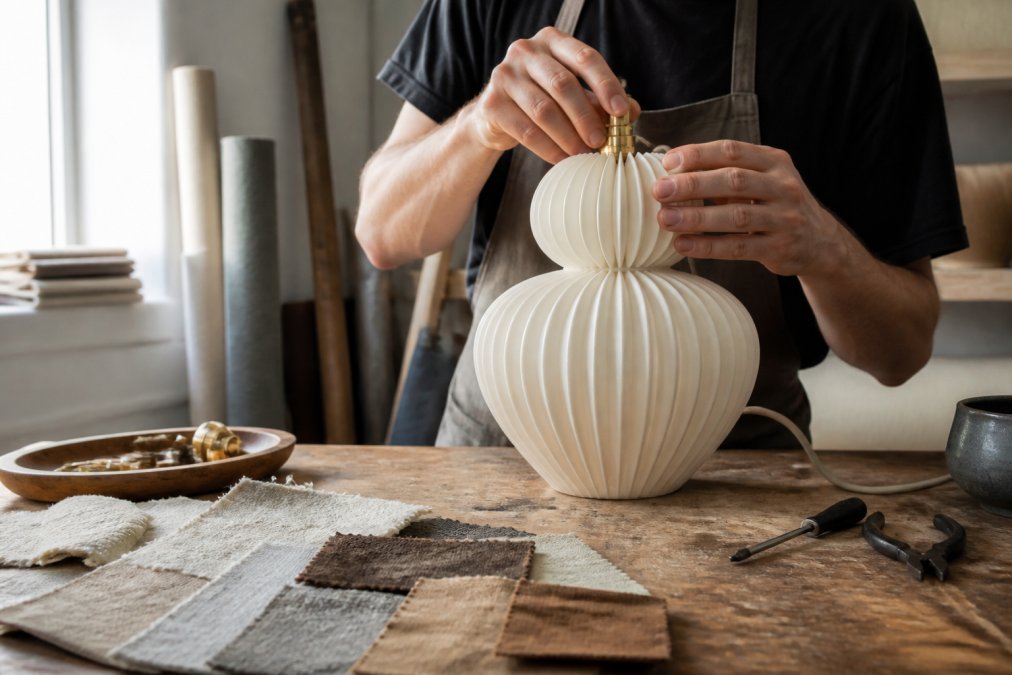
This hands-on process is what elevates handmade lighting fixtures into functional art. You can see the difference in the way a hand-blown glass shade catches the light or how a pleated fabric diffuses a warm glow. The manufacturing process for a small batch allows for material blending and techniques that automated lines cannot replicate.
A common mistake is assuming "handmade" means fragile or less precise. In practice, the opposite is true. Because each piece is handled individually, the maker catches structural weaknesses early and corrects them. The result is a fixture built to a standard that prioritizes longevity over the next production cycle.
Is Bespoke Lighting Better for Home Value?
When considering whether bespoke lighting is better for home value, the answer depends on what you mean by value. If you mean resale price, a single fixture rarely changes an appraisal. But if you mean the daily value of living in a space that feels intentional and complete, the return is substantial.
Bespoke design transforms a room from a collection of furniture into a curated environment. A sculptural pendant or a statement table lamp becomes a conversation piece, anchoring the interior decor in a way that generic lighting cannot. For design-conscious homeowners, this aesthetic payoff is the primary consideration.
There is also a quieter investment angle. Limited edition and made-to-order pieces from reputable studios tend to hold their relevance far longer than trend-driven mass-produced items. The design aesthetic is timeless because it originates from artistic intent, not a seasonal catalog. For renters, this portability matters too: a quality table lamp moves with you, carrying the atmosphere of your home from one space to the next.
Sustainable Lighting Design Trends to Embrace
Sustainable lighting design trends have moved beyond just energy-efficient bulbs. The conversation now centers on the entire lifecycle of a product, from sourcing to disposal. Small-batch production is inherently aligned with these values because it generates less waste than mass manufacturing.
When pieces are made to order, studios avoid the overproduction that fills warehouses and eventually landfills (sciencedirect.com). This waste reduction is a core principle of ethical production. Many buyers also care about supply chain transparency, wanting to know where the raw materials come from and who assembled their lamp. Small studios offer this visibility naturally.
The environmental impact of shipping is also reduced when items are made locally (the EPA). Local sourcing of materials and production cuts down the carbon footprint associated with global logistics. Choosing a handmade fixture is a direct way to support sustainable manufacturing while surrounding yourself with objects that carry meaning.
How to Choose Sculptural Lighting for Your Space
Choosing sculptural lighting for your space starts with defining the role the piece will play. Are you looking for a primary light source for a reading nook, or a mood-setting accent for a living room? Table lamps like the Nami or the Solaris offer a soft, diffused glow ideal for bedside tables and cozy corners, while larger fixtures can anchor an entire room.
Consider the scale relative to your furniture. A sculptural lamp should complement, not overwhelm, its surroundings. Look at the lampshade materials and surface finishes, and think about how they interact with your existing palette. The goal is to add texture and warmth without clashing.
Here is a quick framework to guide your decision:
- For a calming bedroom: Choose a lamp with a pleated or fabric shade for maximum diffusion, like the Nami Table Lamp at $269.00.
- For a budget-friendly accent: The Mochi Table Lamp at $80.00 offers a soft, rounded form that brings quiet presence to small spaces.
- For a statement piece: The Solaris Table Lamp at $129.00 or the Reef Table Lamp at $129.00 bring sculptural forms that serve as focal points.
The Practical Side: Durability and Maintenance
A frequent concern with high-end decor is whether it can survive daily life. Handmade lighting, when constructed properly, is built to last. The key is repairability. Unlike mass-produced fixtures that are often discarded when a component fails, small-batch pieces are usually designed so that shades, cords, or sockets can be replaced or repaired.


This focus on durability is a direct challenge to the disposable culture of fast furniture. When you invest in a piece from a studio that stands behind its work, you gain the ability to maintain it over time. This is where the long-term value of artisanal craftsmanship becomes tangible.
Regarding safety, reputable studios in Canada adhere to strict electrical standards (canada.ca). Fixtures sold through proper channels are certified for use in residential settings, giving you peace of mind alongside the aesthetic appeal. Always verify that the piece you buy meets the electrical safety certification standards required in your province.
| Consideration | Mass-Produced Lighting | Small Batch Handmade |
|---|---|---|
| Quality Control | Batch-level inspection | Individual piece inspection |
| Customization | Fixed catalog options | Bespoke design and custom orders |
| Longevity | Often replaced within years | Built for repair and long-term use |
| Environmental Impact | High production waste | Waste reduction via made-to-order |
| Uniqueness | Widely available | Limited runs and one-of-a-kind |
Bringing It Home: Making the Investment
Deciding to invest in handmade lighting is about shifting your perspective from filling a room to curating it. The initial cost is higher than a big-box alternative, but the value you receive is different in kind, not just degree. You are paying for bespoke design, for materials chosen by hand, and for a piece that embodies sustainable manufacturing principles.
This is where the benefits of small batch handmade lighting become a daily experience. The warm glow of a well-crafted lamp changes the atmosphere of a room after dark. It creates softer, warmer spaces for moments of relaxation. That sense of calm is the real return on your investment, one that pays dividends every evening you switch it on.
Choosing between a single statement piece and several smaller accents is a common dilemma. A well-chosen sculptural lamp has the presence to transform an entire corner, offering a visual anchor that multiple generic pieces cannot replicate. At ORIJA, we craft each piece in our Ontario studio with this intention in mind, focusing on high-end lighting design that brings warmth and character to your home. Explore our collection of made-to-order sculptural lighting and find the piece that will define your space. Shop All
Frequently Asked Questions
What makes small batch lighting different from mass-produced fixtures?
Small batch lighting is produced in limited quantities, often made to order. This allows for rigorous quality control at every step, from material selection to final assembly. Unlike mass-produced fixtures that rely on automated processes, each piece receives individual attention, resulting in unique characteristics and a higher level of finish. You get a functional art piece with its own story, not just a uniform product from a catalog.
Is bespoke lighting better for home value?
Bespoke lighting can positively impact perceived home value. A unique, high-quality fixture often serves as a focal point and conversation starter, adding a layer of intentional design that standard lighting cannot. While it may not directly appraise like a kitchen renovation, it signals quality and care to potential buyers.
How does handmade lighting improve the atmosphere of a room?
Handmade lighting, especially sculptural pieces, does more than illuminate. The interaction of the bulb with unique materials like textured shades or hand-blown glass creates a softer, more diffused glow compared to harsh direct light. This ambient light reduces glare and casts interesting shadows, fostering a calmer, more inviting atmosphere. The piece itself also adds a layer of texture and artistic expression that contributes to a room's overall feeling of warmth and intentionality.